Any relationship comes with strengths, challenges, learning curves, and opportunities for growth and dating someone on the autism spectrum is no different. Every autistic person is unique, and no two relationships will look the same. However, understanding neurodiversity can help create stronger communication, deeper connection, and more compassion within a relationship by encouraging partners to better understand each other’s needs, communication styles, and the different ways each of you processes emotions.
At its core, dating someone with autism is not about “fixing” differences or trying to make someone fit into traditional relationship expectations. It is about recognizing that people experience, process, and respond to the world in different ways. Dating someone with autism requires a higher level of compassion and patience than what individuals are used to. For example, those on the spectrum may need to recharge in ways that are unfamiliar to their partner such as reading for many hours after a long day, spending time alone, not wanting to engage with others due to feelings of being overwhelmed and overstimulated.
What feels natural or intuitive to one person may not feel the same to another, and that does not make either person wrong. Healthy relationships are built when both partners are willing to learn about each other’s communication styles, emotional needs, boundaries, and ways of expressing care. This may mean adjusting expectations, practicing more direct communication, being patient during misunderstandings, or learning to appreciate forms of affection that may look different from what society typically portrays.
What Does Being Neurodivergent Mean?
The term neurodivergent refers to individuals whose brains process, learn, or experience the world differently from what is considered “typical.” Autism is one form of neurodivergence and ADHD is another. (click here to read more about dating and ADHD). This article is about dating as a person on the Autism Spectrum. Autistic individuals may experience differences in communication, sensory processing, emotional expression, routines, social interactions, and relationships. It’s important to remember that autism exists on a spectrum. Some autistic individuals may be highly expressive and social, while others may prefer quieter environments and need more alone time. For example, some may communicate very directly, while others may struggle to express emotions verbally.
Strengths Autistic Individuals Bring to Relationships
While everyone is different, oftentimes individuals on the autism spectrum have qualities that can be very helpful in a relationship. These qualities might look like:
- Honest and direct
- Loyal and dependable
- Deeply passionate about their interests
- Thoughtful and attentive in their own ways
- Consistent and genuine
- Less likely to engage in games or mixed signals
Many autistic individuals find authenticity and clear communication very helpful, which can create a strong foundation for trust and emotional safety in relationships.
Communication May Look Different
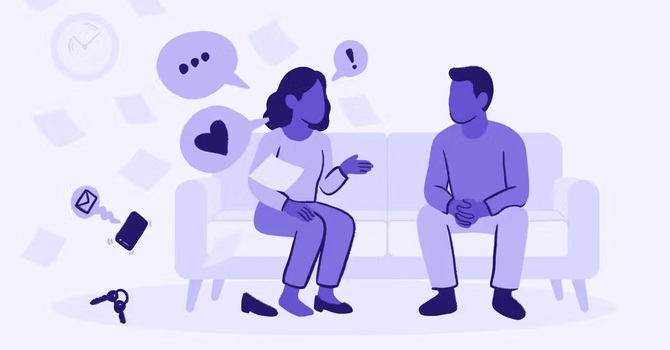
One of the biggest areas couples may need to navigate within the relationship is communication. Neurotypical communication often relies heavily on indirect language, reading between the lines, body language, or implied expectations. Autistic individuals may communicate and interpret communication more literally or directly.
For example
A neurotypical partner may say: “I’m fine.” while actually hoping their partner notices they are upset.
An individual with autism would be more direct: “I’m fine” means they actually are fine.
An autistic partner may interpret this statement literally and believe that everything truly is fine. This can sometimes lead to misunderstandings that result in both partners feeling unheard and confused.
Clear, direct communication can be incredibly helpful in neurodivergent relationships. Saying exactly what you need, feel, or mean can reduce confusion and help both partners feel more secure.
For example
If something is bothering you instead of saying “I’m fine” and hoping your partner either asks further or knows you aren't actually fine, try being direct and saying “I’m not fine”. By doing this, you ensure communication is clear and leaves no room for guessing.
Sensory Needs Matter
Many autistic individuals experience sensory sensitivities. Loud environments, bright lights, certain textures, crowded spaces, or too much stimulation can feel overwhelming or exhausting. This does not mean someone is being difficult or antisocial. It simply means their nervous system processes sensory input differently.
In relationships, this may look like:
- Needing quiet time after social events
- Feeling overwhelmed in busy environments
- Preferring certain textures or avoiding physical touch at times
- Becoming emotionally drained after prolonged stimulation
Understanding sensory needs can help couples approach these moments with compassion rather than frustration.
Emotional Expression May Look Different Too
A common misconception is that autistic individuals lack empathy or emotional depth. In reality, many autistic people experience emotions very deeply. The difference is often in how emotions are expressed or communicated.
Some autistic individuals may struggle to identify or verbalize their emotions, need extra processing time during conflict, or become overwhelmed during emotionally intense conversations. Many also show love and care through actions rather than words - being physically present or close but not touching, routine sharing, or connecting over a shared interest for example. Emotional expressions may look different, but that does not make their feelings any less real or meaningful.
Supporting Each Other
Every relationship has differences to navigate. Neurodivergent relationships are no exception. While there may be moments of misunderstanding or adjustment, there can also be incredible honesty, loyalty, emotional depth, and connection. When both partners approach each other with patience, openness, and compassion, relationships can become spaces where both people feel safe to be fully themselves.
Dating someone who is autistic does not mean ignoring your own needs. Healthy relationships require communication, compromise, and care from both partners. It is important to have boundaries, express your needs openly, ask for support when needed, and have honest conversations about challenges as they arise. Strong relationships are not built by trying to change one another, but by learning how to better understand, support, and accept each other. When both people feel heard, valued, and respected, relationships can grow in meaningful and lasting ways.
How Therapy Can Help
Relationships can be deeply rewarding, but they can also feel challenging at times especially when communication styles, emotional needs, or ways of processing the world differ. Couples therapy or individual therapy can offer a supportive space to slow down and better understand one another. This might look like working through misunderstandings and strengthening connection in a way that feels meaningful for both partners. Therapy is not about changing who someone is, but about creating healthier patterns of communication, increasing understanding, and helping both people feel more supported within the relationship.
At The Therapy Nest, we recognize that every relationship is unique. Our therapists offer compassionate, neurodiversity-affirming support for individuals and couples navigating communication, emotional connection, identity, and relationships. We strive to create a safe, welcoming space where people feel heard, respected, and supported exactly as they are.
Emily Russell
Licensed Counselling Therapist (LCT-C) with the College of Counselling Therapists of New Brunswick (CCTNB) and a Certified Canadian Counsellor (CCC) with the Canadian Counselling and Psychotherapy Association (CCPA).
Contact Me