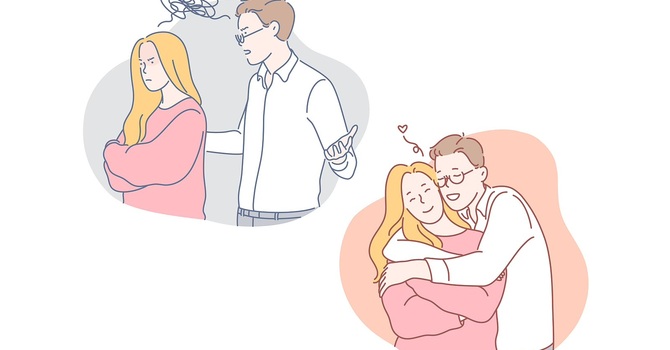
First of all, let’s talk about what boundaries are and what they are not.
Boundaries are the limits and guidelines we set to define what feels safe, respectful, and acceptable for us. They clarify what our own personal needs and limitations are, emotionally, physically, mentally, and practically. Healthy boundaries allow us to express our needs, values, and limits without controlling others or abandoning ourselves. They help us protect our time, energy, and well-being while remaining open to connection. Rather than pushing people away, boundaries create clearer, more sustainable relationships built on mutual respect and understanding. Boundaries can be set in any aspect of your life, whether that be romantic relationships, with parents, at work, friendships etc. but sometimes boundaries can feel difficult to set.
You have probably heard someone say, “Just set a boundary.”
It sounds simple. Direct. Almost easy.
So why does your stomach drop when you think about saying no to that person? Why can’t you just send the text message to them?
Well, the answer is that we are afraid that if we set boundaries, they might leave us. Therefore, we abandon ourselves often before anyone abandons us. If you want to know more about self-abandonment, here is a link to an article by Sharon Martin on self-abandonment.
If setting boundaries feels hard, there is nothing wrong with you. There are real psychological, relational, and nervous system reasons behind it. Psychologically, boundary-setting challenges core beliefs you may have developed early in life. If you learned directly or indirectly that being loved meant being helpful, agreeable, low-maintenance, or self-sacrificing, then saying no can feel like you’re violating a rule you didn’t even know you were following.
Let’s look at what’s actually happening underneath.
1. Boundaries Can Trigger Fear of Rejection
Every boundary carries risk.
When setting a boundary, you are introducing the possibility that someone may feel disappointed, annoyed, confused, or defensive.
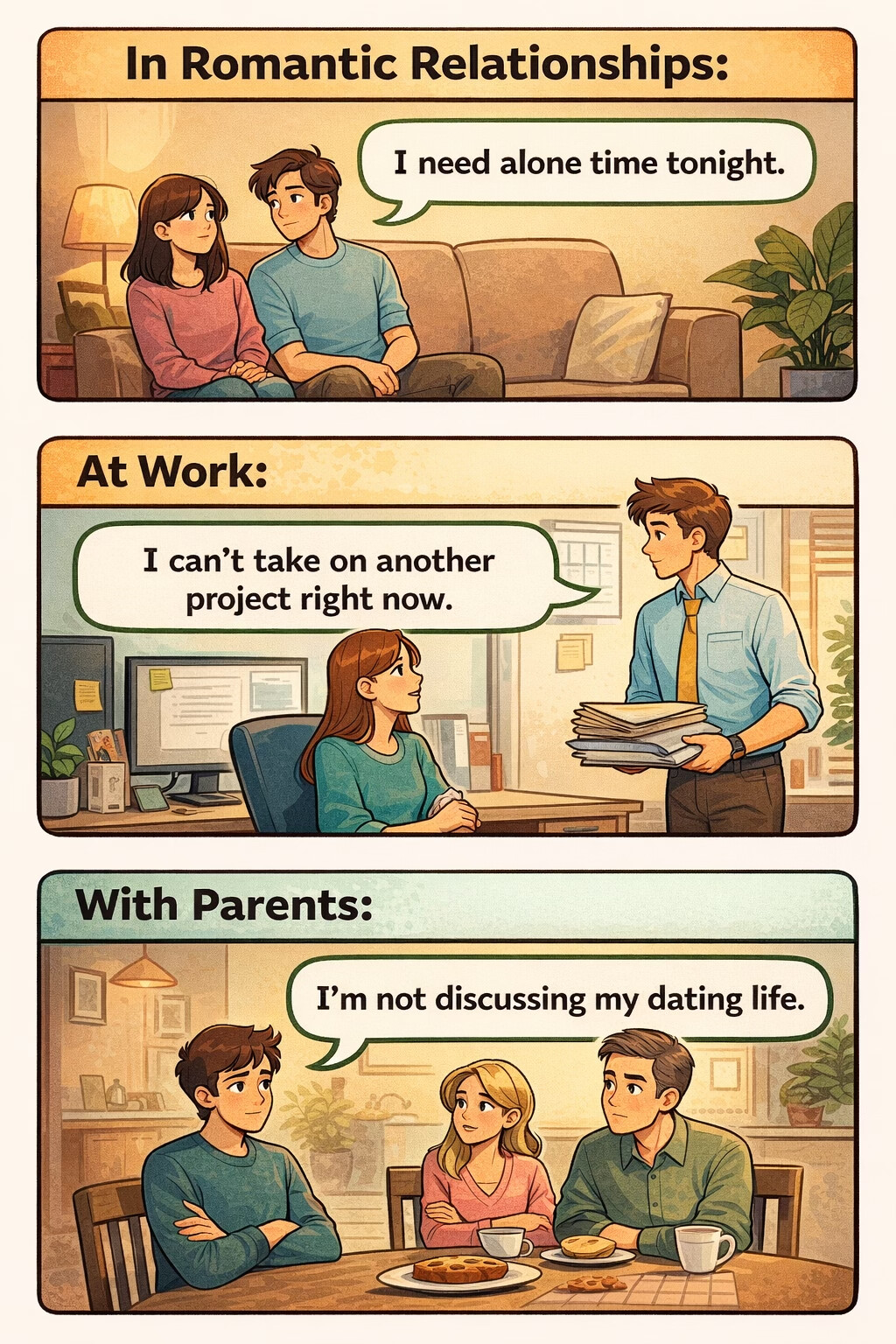
In romantic relationships, this might sound like:
- “I need alone time tonight.”
- “I’m not okay with being spoken to like that.”
At work:
- “I can’t take on another project right now.”
- “I need clearer deadlines if this is urgent.”
With parents:
- “I’m not discussing my dating life.”
- “I won’t be coming for every holiday this year.”
On the surface, these statements are reasonable. They’re not aggressive. They’re not unkind. They’re simply clear.
But psychologically, boundaries can activate one of our deepest human fears: rejection.
Humans are wired for attachment. From an evolutionary standpoint, belonging meant survival. Being excluded from the group once carried real physical risk. While we no longer depend on tribe survival in the same way, our nervous systems haven’t fully updated. Social rejection still lights up the same pain pathways in the brain as physical pain.
So, when you assert a boundary, even a healthy one, your brain may subconsciously register:“This could threaten the connection.”
For people who grew up in environments where love felt conditional where approval depended on being helpful, agreeable, high-achieving, quiet, or emotionally low-maintenance boundaries can feel especially unsafe.
If connection was inconsistent or unpredictable, you may have learned:
- Keep the peace.
- Don’t upset anyone.
- Be easy.
- Don’t need too much.
In those environments, being accommodating wasn’t just polite it was protective.
So now, when you say:
“I’m not comfortable with that.”
Your brain may translate it as:
“If I upset them, I might lose them.”
“If they’re disappointed, they’ll withdraw.”
“If I’m inconvenient, I won’t be valued.”
Even if those fears aren’t logically true in your current relationships, your nervous system may still respond as if they are.
You might notice:
- A surge of anxiety before speaking up.
- The urge to over-explain or justify.
- Softening your boundary immediately after stating it.
- Reassuring the other person excessively.
This isn’t because you’re weak. It’s because your system equates harmony with safety.
And when safety feels threatened even subtly your body reacts.
Understanding this shifts the narrative.
It’s not that you “can’t set boundaries.”
It’s that part of you learned that keeping connection required self-sacrifice.
Boundary-setting, then, becomes less about learning a script and more about teaching your nervous system that disagreement does not equal abandonment.
That learning takes time. And compassion.
2. You Might Be Used to Being the “Easy” or “Strong” One
Many adults who struggle with boundaries were praised for being:
- Mature for their age
- The helper
- The peacemaker
- The responsible one
- The one who “doesn’t need much”
Over time, that role becomes part of your identity.
In relationships, you might be:
- The partner who always compromises.
- The one who manages the social calendar.
- The one who apologizes first — even when you’re hurt.
At work:
- The colleague who says yes to extra shifts.
- The employee who covers for others.
- The one who answers emails late at night.
With parents:
- The “good child.”
- The emotional support for a parent.
- The sibling who keeps everyone calm.
So, when you begin asserting needs, it can feel like you’re breaking character.
Setting a boundary might look like:
- “I can’t mediate this argument.”
- “I won’t respond to work messages after 6 p.m.”
- “I’m not able to host this year.”
And suddenly guilt shows up.
Not because you’re wrong but because you’re shifting a long-standing dynamic.
3. Your Nervous System Interprets Conflict as Threat
Boundary-setting isn’t just a communication skill. It’s a nervous system event.Relationally, boundaries disrupt patterns. Every relationship has an unspoken rhythm — who initiates, who gives more, who accommodates, who avoids tension. When you change your part of that pattern, even in a healthy way, the dynamic shifts. And shifts create discomfort.
For example:
- If you’ve always been the friend who shows up no matter what, declining an invitation changes the expectation.
- If you’ve always absorbed tension in your family, stepping back may create space others aren’t used to filling.
- If you’ve always taken on extra work, your manager may need to redistribute responsibilities.
Change doesn’t automatically mean something is wrong. It simply means the system is adjusting.
And then there’s your nervous system.
If you grew up in an environment where conflict led to withdrawal, anger, unpredictability, or shame, your body may still associate disagreement with danger. So even if you are now in safe adult relationships, your physiology might respond as though you are at risk.
You might notice:
- Tightness in your chest
- Racing thoughts
- The urge to over-explain
- Saying “sorry” repeatedly
- Backtracking after stating your need
In a relationship, you might say:
“I feel hurt when that happens… sorry, I know you didn’t mean it.”
At work:
“I can’t take this on right now… but if you really need me to, I’ll try.”
With parents:
“I don’t want to talk about that… but it’s fine, never mind.”
Those reactions are not immaturity or weakness. It’s conditioning.
Your nervous system’s job is to protect you. If, at one point in your life, keeping the peace kept you safe, then your body learned that strategy well.
Boundary-setting asks you to tolerate short-term discomfort for long-term health. And that can feel deeply unfamiliar especially if your system equates harmony with safety.
So, if it feels hard, that doesn’t mean you’re incapable.It means you’re unlearning something that once helped you survive. And unlearning takes time, repetition, and compassion.
4. You May Confuse Boundaries with Control
Some people hesitate to set boundaries because they fear they might come across as “mean,” “difficult,” or controlling. Control is an attempt to manage or dictate another person’s behaviour to reduce your own discomfort. It focuses on changing the other person. Boundaries, on the other hand, focus on clarifying your limits and adjusting your own behaviour accordingly. They are about what you will or won’t participate in not about forcing someone else to comply.
For example, in a relationship, saying,
“You’re not allowed to go out with your friends,” is control.
It attempts to restrict the other person’s choices. A boundary would sound more like,
“If you continue coming home at 3 a.m. without communicating, I’m not comfortable staying in this relationship.”
Notice the difference: one tries to dictate behaviour, while the other defines a personal limit and the action you will take if that limit continues to be crossed. One is about power over someone else; the other is about responsibility for yourself.
What Happens When You Don’t Set Boundaries
When boundaries aren’t expressed, they don’t simply disappear, they tend to resurface in other ways. What isn’t said often turns into resentment, emotional withdrawal, burnout, passive-aggressive communication, or underlying anxiety. In relationships, this might look like slowly pulling away or feeling disconnected but not fully understanding why. At work, it can show up as exhaustion, irritability, or even “quiet quitting” after months or years of overextending yourself. With parents or family, it may lead to avoiding visits or limiting contact altogether because being present feels draining. Many people come to therapy not because they don’t know how to set boundaries, but because they’ve been giving beyond their capacity for so long that something in them finally feels depleted. Boundaries ultimately protect your energy, preserve your relationships from quiet resentment, and safeguard your sense of self.
How Therapy Can Help
Therapy can really help with boundaries because it looks at what’s going on underneath the behavior, not just what words to use. For a lot of people, difficulty setting boundaries goes back to earlier relationships where being agreeable, helpful, or “easy” felt like the safest way to stay connected. In therapy, you slowly start to understand where those patterns came from and why they once made sense. That understanding can ease some of the shame and remind you that your struggle isn’t a personal flaw, it's something you learned.
Therapy also helps with the emotional side of speaking up. When you try to set a boundary, it’s common for anxiety, guilt, or the urge to over-explain to show up. In a supportive, understanding therapeutic relationship, you get space to notice those feelings without immediately backing down. Over time, you can practice expressing your needs, sitting with a bit of discomfort, and seeing that disagreement doesn’t automatically mean disconnection.
Little by little, this helps shift an old belief that boundaries will push people away toward a new one: that healthy relationships can actually hold honesty and still stay connected.
Example of healthy boundaries:
Emily Russell
Licensed Counselling Therapist (LCT-C) with the College of Counselling Therapists of New Brunswick (CCTNB) and a Certified Canadian Counsellor (CCC) with the Canadian Counselling and Psychotherapy Association (CCPA).
Contact Me